Offroad Outlaws
- 4.4
- Rating
- 10.00M
- Installs
- Free
- Price

 Analysis by App-foxy
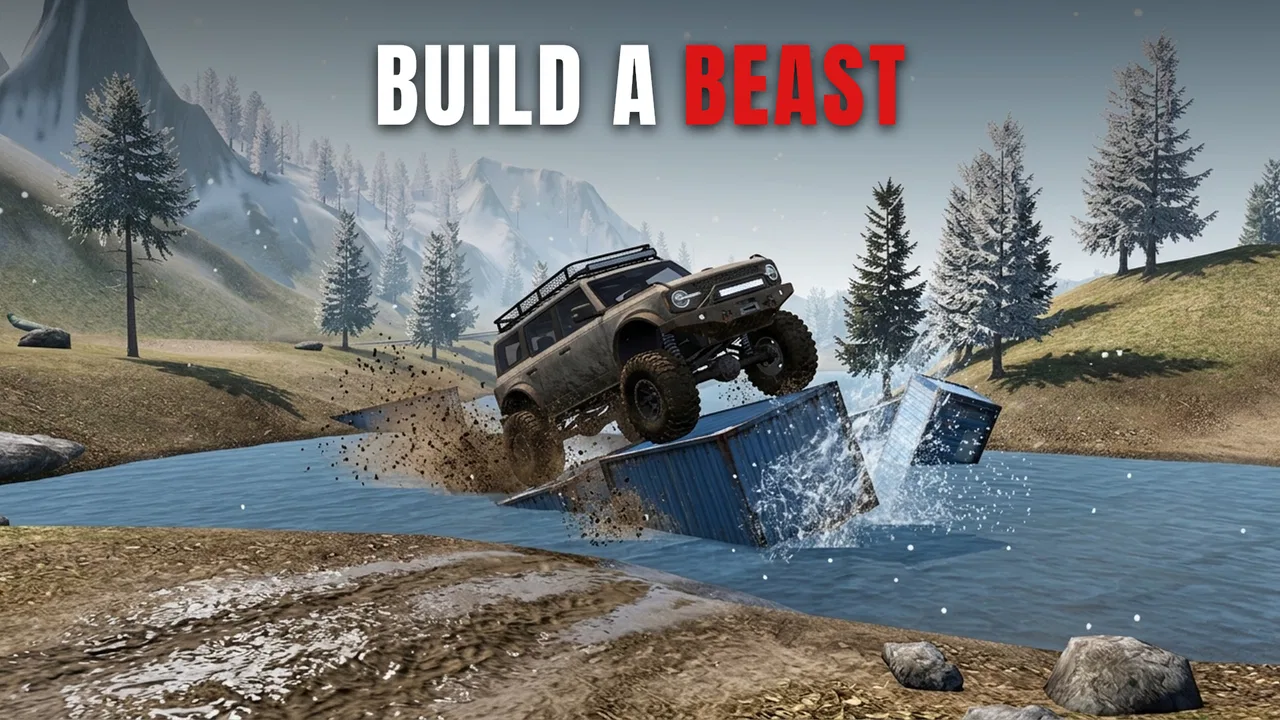
I approached Offroad Outlaws expecting a straightforward mud-and-machines racing game, but its appeal is broader than simply pressing the accelerator. Developed by Battle Creek Games, LLC, this free racing game puts the emphasis on controlling off-road vehicles through rough terrain, where patience, steering, and choosing a sensible route can matter as much as speed. That makes it feel different from polished circuit racers that reward perfect laps above everything else.
After spending time with it, I see the game as a useful choice for players who enjoy experimenting with trucks, ATVs, and four-wheel-drive vehicles rather than chasing only traditional race results. It is also a game that can be approached in short sessions, although learning to handle loose ground takes more attention than the store summary might suggest. The important question is not whether it has off-road driving; it clearly does. The better question is whether its controls, presentation, and pace suit the way you like to play.
How the interface supports different players
The first thing I noticed is that an off-road game needs readable information more than decorative presentation. When the vehicle is climbing, sliding, or trying to find grip, I need to understand what the game is asking me to do without hunting through crowded menus. Offroad Outlaws generally keeps the central driving task easy to identify, which helps when I am concentrating on a bend or trying to avoid losing momentum.
You May Also Like

 Blood Strike: 2.5 Anniversary
Blood Strike’s Loadouts Turn Every Drop Into a Tactical Gamble
A close look at Blood Strike’s custom loadouts: how fast access to signature weapons reshapes its battle royale rhythm, rewards preparation, and narrows the gap between fights.

 Pandora - Music & Podcasts
Pandora’s Music Is Easy to Start, but Harder to Recover
Pandora’s strength is its low-effort path from a seed to a station. Its weak spot is how much confidence it asks you to place in connection, setup, and quiet recovery.

 8 Ball Pool
 Is Built on Rivalries, Rematches, and Routine
A close look at the rivalries, rematches, shared routines, and unanswered safety questions that turn a quick pool match into a persistent mobile community.

 Samsung Music
’s Quiet Strength Is Playing What You Already Own
Its reach comes less from spectacle than from dependable access to a personal library. That simplicity is both the app’s strongest retention engine and its ceiling.

 AccuWeather: Weather Radar
AccuWeather Review: A Quick, Clear Forecast for Everyday Decisions
For everyday plans, the best forecast is the one you can understand quickly. AccuWeather makes rain timing, radar, and local conditions easy to act on, with a few trade-offs.

 Hill Climb Racing
Why Hill Climb Racing Still Turns Crashes Into One More Run
A tiny car, a bumpy hill and one more upgrade: Hill Climb Racing keeps resurfacing because its simple chaos makes every near-miss feel personal.
More From Our News Desk



That simplicity is valuable for people who do not want a long setup before driving. I can get into the action without treating the game like a complicated simulator. At the same time, the number of vehicle choices and driving situations means the experience is not completely effortless. New players may need a few attempts before they understand how much steering is appropriate on uneven ground.
For readability, screen size makes a real difference. On a larger phone or tablet, driving controls and visual cues have more room to breathe. On a smaller display, my fingers can cover part of the action, especially when I am making a quick correction. This is not a reason to reject the game, but it does mean that players who already struggle to distinguish small interface elements may find a larger screen more comfortable.
I also like that the basic idea is easy to explain to another person: choose an off-road vehicle, learn how it behaves, and work through difficult ground. That makes it approachable for someone who does not normally play racing games. It is less immediately accessible to someone who expects every race to be a clear, high-speed contest with obvious lanes and a single best route.
Learning the controls without rushing
The most helpful approach is to treat the opening sessions as practice rather than as a test of skill. I found that trying to drive aggressively from the start created unnecessary mistakes. A slower first run lets me see how the vehicle reacts before I worry about finishing quickly. This is especially useful for players who need more time to coordinate touch input or who prefer predictable movements.
One practical tip is to use small steering adjustments instead of holding a direction for too long. Off-road surfaces punish overcorrection, and a large swipe or sustained input can turn a manageable slide into a complete loss of control. Short, deliberate movements are easier to repeat and also reduce the amount of frantic finger movement on the screen.
Another useful habit is to look ahead before committing to a climb or muddy section. The quickest-looking line is not always the easiest one to control. I often get a better result by preserving a steady approach than by entering a difficult patch at maximum speed. That is a small but meaningful difference from arcade racers where acceleration is usually the safest answer.
The game can therefore suit players with different levels of racing experience, but it does not remove the need to learn. Someone looking for instant mastery may find the early handling less friendly. Someone who enjoys gradually understanding a vehicle will probably appreciate that the terrain creates room for improvement instead of making every attempt feel identical.
Visual and sensory demands during a drive
Off-road driving is naturally busy on the screen. The vehicle moves over irregular ground, the background changes quickly, and the player has to judge direction while watching for obstacles or difficult surfaces. I found that the visual demand rises most during tight turns and climbs, when there is less time to process what is happening.
Players who are sensitive to motion or visual clutter may prefer shorter sessions and a calmer pace. I would not recommend beginning with a long play period if screen movement tends to cause discomfort. Taking breaks also helps because the game encourages repeated attempts, and repetition can make a visually demanding section feel more tiring than expected.
Sound can influence how connected the driving feels, but the game remains understandable when I focus on the visual action. That makes it more suitable for situations where I cannot rely on audio, such as playing quietly in a shared room. Even so, anyone who depends heavily on sound cues should approach it as a visual driving experience rather than assuming audio will always provide the most important information.
Brightness and glare are practical concerns. Outdoor play or a brightly lit room can make dark terrain and small details harder to read, while a dim screen may hide changes in the route. I get the clearest results by adjusting the device before starting instead of trying to compensate with rushed steering. This is ordinary advice, but it matters more here because the surface itself is part of the challenge.
There is also a trade-off between realism and ease. The rougher the driving feels, the more satisfying it is when I finally complete a difficult section, but that same roughness can frustrate players who want a smooth, forgiving ride. Offroad Outlaws is at its best when I accept that the vehicle may need correction and that failure is part of learning the terrain.
Where it works well in everyday situations
The game fits a short break better than a game that demands a long uninterrupted story. If I have a few minutes while waiting for an appointment, I can use that time to attempt a route or practice a vehicle. The driving focus makes it easy to understand what I am doing, even when I have not played for several days.
It can also work well as a shared-interest game between friends or family members who enjoy vehicles. One person can explain why a particular approach failed, while another tries a slower line or a different style of control. The appeal is not limited to competitive racing fans; people who like trucks, ATVs, and mechanical experimentation may enjoy the process of finding out what works.
For a player using one hand, the experience may be more demanding during technical sections because steering and movement require attention at the same time. I would be more comfortable recommending it to someone who can use both hands or who has already found a touch-control method that works for them. A player with limited reach or reduced precision may still enjoy relaxed driving, but the hardest terrain could become tiring.
That distinction is important. Inclusive design does not mean every challenge disappears. In this game, the challenge is closely tied to controlling a vehicle on unstable ground. Removing too much of that difficulty would change the experience. The realistic recommendation is to match the game mode and session length to the player’s comfort, rather than expecting one control approach to suit everyone.
It is also a sensible option for people who prefer playing without committing to a large download of attention. The free price makes it easy to try, while in-app purchases range from under a dollar to well over a hundred dollars per item. I would treat spending as optional rather than part of the reason to begin. Anyone who is sensitive to purchase prompts should decide on a personal limit before playing, especially because vehicle-focused games can make upgrades or customization feel tempting.
How it compares with more conventional racing games
Compared with a circuit racer, Offroad Outlaws is less about clean racing lines and more about managing changing ground. In a typical track game, braking points and corner timing dominate. Here, I spend more attention on traction, positioning, and whether the vehicle can maintain a useful line through a rough area. That makes it a better alternative for players who find smooth asphalt racing repetitive.
Compared with an arcade racer, it can feel less immediately rewarding. Arcade games often give a strong sense of speed from the first turn, while this one asks me to respect the terrain. If I want dramatic acceleration, simple drifting, and instant visual feedback, another racing game may be a better fit. If I want a vehicle to feel affected by the surface beneath it, this game has the stronger identity.
It also differs from a strict simulation. I do not approach it as a professional driving tool or a technical lesson. The game is more approachable than that, with a focus on enjoyable off-road control rather than making every detail intimidating. That middle ground is probably its strongest position: it has enough resistance to make driving interesting without demanding the patience of a full simulator.
The choice becomes clearer when I ask what kind of satisfaction I want. I choose a circuit racer when I want a clean contest, an arcade racer when I want quick spectacle, and Offroad Outlaws when I want to experiment with routes and recover from mistakes. Those are different moods, not simply different versions of the same game.
Barriers that still affect the experience
The biggest barrier is touch precision. Rough terrain creates situations where a small input matters, and that can be difficult for players with tremors, limited finger movement, or fatigue. I found that repeated corrections can become physically tiring even when the game itself is enjoyable. A device that responds reliably to light touches makes a noticeable difference.
Another barrier is the visual concentration required during demanding sections. Players with low vision, color-vision differences, or difficulty tracking moving objects may have trouble separating the vehicle, terrain, and route at a glance. I would not assume that the game’s general simplicity solves those issues. A larger display, good lighting, and a comfortable viewing distance can help, but they cannot replace clearly designed alternatives for every player.
The learning curve may also discourage people who want immediate success. The game’s off-road identity depends on imperfect surfaces, so mistakes are expected. That is satisfying for me when I am in the mood to practice, but frustrating when I only want a relaxing drive. The same mechanic that gives the game character can make it feel inaccessible to a player who needs consistent, low-pressure results.
Purchase pressure is a separate consideration. Because the game is free to start and includes optional purchases, it is easy to begin casually. Families should still discuss spending rules before handing the game to a younger player. The Everyone 10+ rating gives a general age context, but it does not replace a parent’s judgment about whether the driving difficulty, screen time, and purchase system suit a particular child.
Performance can vary by device, and older hardware may make a demanding driving scene feel less comfortable if movement is not smooth. The minimum operating-system requirement is Android 7.0, while the current version is 7.0.419. Those details matter when deciding whether an older phone is a sensible place to play, particularly for someone who is already sensitive to stutter or delayed touch response.
Who should install it, and who should skip it
I would recommend Offroad Outlaws to players who like trucks, ATVs, four-wheel-drive vehicles, and the idea of solving a route rather than simply following a track. It is especially appealing if you enjoy replaying a difficult section to improve your approach. The game rewards curiosity: changing speed, adjusting steering, and trying a different line can produce a better result than repeating the same rushed attempt.
I would be more cautious about recommending it to someone who wants a quiet, low-effort game with minimal visual movement. It is also not my first choice for a player who dislikes touch controls that require constant correction. A polished circuit racer may be kinder if the main goal is predictable handling, while a simpler arcade game may be better for quick entertainment with less learning.
For players with motor or sensory considerations, I suggest starting with brief sessions, using the largest comfortable screen available, and reducing the urge to drive at full speed. Those changes do not create a special accessibility mode, but they can make the existing experience more manageable. The key is to separate the enjoyment of exploring the vehicles from the pressure to complete every difficult section immediately.
The game has also built a substantial audience, with an average rating of 4.4 from roughly 248 thousand ratings and more than 10 million installs. That popularity does not guarantee that every player will find the controls comfortable, but it does show that the off-road formula has reached well beyond a small niche. I see it as evidence of broad interest rather than a substitute for trying the handling yourself.
My inclusive verdict after living with the controls
Offroad Outlaws succeeds because it gives off-road driving its own rhythm. I am not merely chasing speed; I am deciding how much control I can preserve while the ground works against me. That makes the game distinctive, and it gives players who enjoy vehicles a reason to return after an imperfect attempt.
Its support for different abilities and contexts is practical rather than comprehensive. The straightforward premise, short-session potential, and visual driving focus make it approachable in several situations. On the other hand, touch precision, moving scenery, and the need for repeated corrections remain real barriers. Players with motor, visual, or sensory needs should judge it by the demands of its hardest driving, not only by how simple the menus appear.
I also appreciate that the game is free to begin, but I would keep the purchase range in mind and set boundaries before playing. The developer, Battle Creek Games, LLC, has created something that works best when I treat it as an off-road playground instead of a conventional race ladder. That mindset makes the slower learning curve feel worthwhile.
My final recommendation is straightforward: try it if you want vehicle control, rough terrain, and room to experiment. Give it a pass if you need effortless steering, minimal visual motion, or a purely speed-focused racing experience. For everyone in between, the best way to enjoy it is to start slowly, choose comfort over speed, and let the terrain teach you how to drive. That approach reveals what makes this racing game enjoyable without pretending that its control demands will suit every player.
FAQs for Offroad Outlaws
01What are the main features of Offroad Outlaws?
Offroad Outlaws offers a comprehensive off-roading experience with customizable vehicles, diverse terrains, and multiplayer options. Players can explore trails, mud bogs, and rock parks while competing in challenges. The game includes a detailed vehicle customization system, allowing you to modify everything from suspension to paint jobs, enhancing both performance and aesthetics.
02Is Offroad Outlaws free to play?
Yes, Offroad Outlaws is free to download and play. However, it includes in-app purchases that allow players to buy in-game currency and items. While these purchases can enhance gameplay, they are not necessary to enjoy the core aspects of the game, which remain fully accessible without spending money.
03How does multiplayer work in Offroad Outlaws?
In Offroad Outlaws, the multiplayer mode lets you team up with friends or compete against players worldwide. You can join or create custom lobbies to explore trails together, race, or participate in challenges. Communication is facilitated through in-game chat, making it a dynamic social experience as well as a competitive one.
04What devices are compatible with Offroad Outlaws?
Offroad Outlaws is available on both Android and iOS platforms. It requires Android 4.4 and up or iOS 9.0 or later. The game is optimized for both phones and tablets, offering a smooth experience across devices. Ensure your device meets these requirements for optimal performance.
05Can I play Offroad Outlaws without an internet connection?
Offroad Outlaws can be played offline, allowing you to explore and enjoy single-player modes without an internet connection. However, to access multiplayer features and updates, an internet connection is necessary. Offline play is limited to certain features, but it remains a robust experience for casual play.
Pros
- Extensive vehicle customization options.
- Realistic off-road physics enhance gameplay.
- Multiplayer mode for competitive fun.
- Varied terrains and challenges add depth.
- Frequent updates with new content.
Cons
- Graphics can be inconsistent at times.
- Ads can interrupt gameplay experience.
- In-app purchases can get pricey.
- Some controls feel clunky on mobile.
- Occasional connectivity issues in multiplayer.

Offroad Outlaws
Gallery